
Cockroach Milk Crystals: Inside the Bizarre Science of Nature's Most Calorie-Dense "Milk"
Somewhere in the gut of a baby cockroach, tiny protein crystals are quietly doing something no dairy cow, goat, or almond ever could: packing more usable energy per gram than any milk known to science. It sounds like a tabloid headline, but it's a real, peer-reviewed finding that has been building for over a decade — and it just won one of science's most attention-grabbing honors, the 2026 Ig Nobel Prize in Chemistry.
This article walks through what these crystals actually are, how researchers figured out their structure, what the newest studies have added, and why an insect most people want to get rid of might matter to the future of food science.
Meet the only cockroach that "lactates"
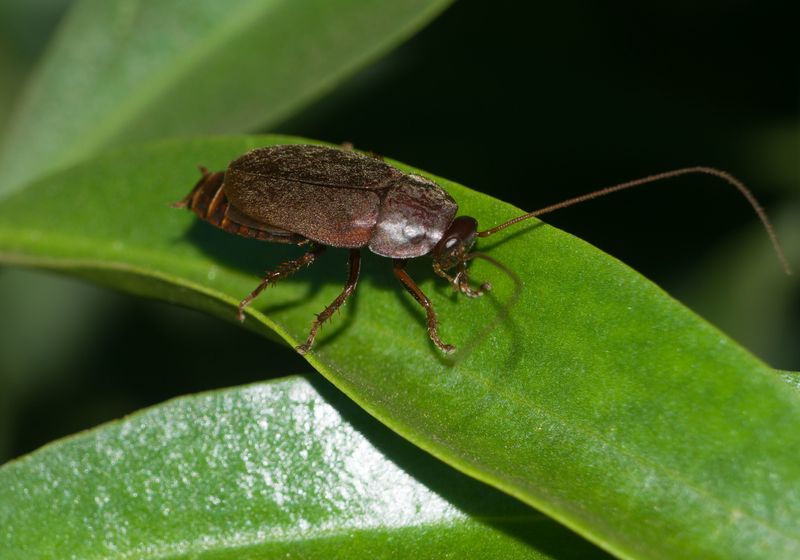
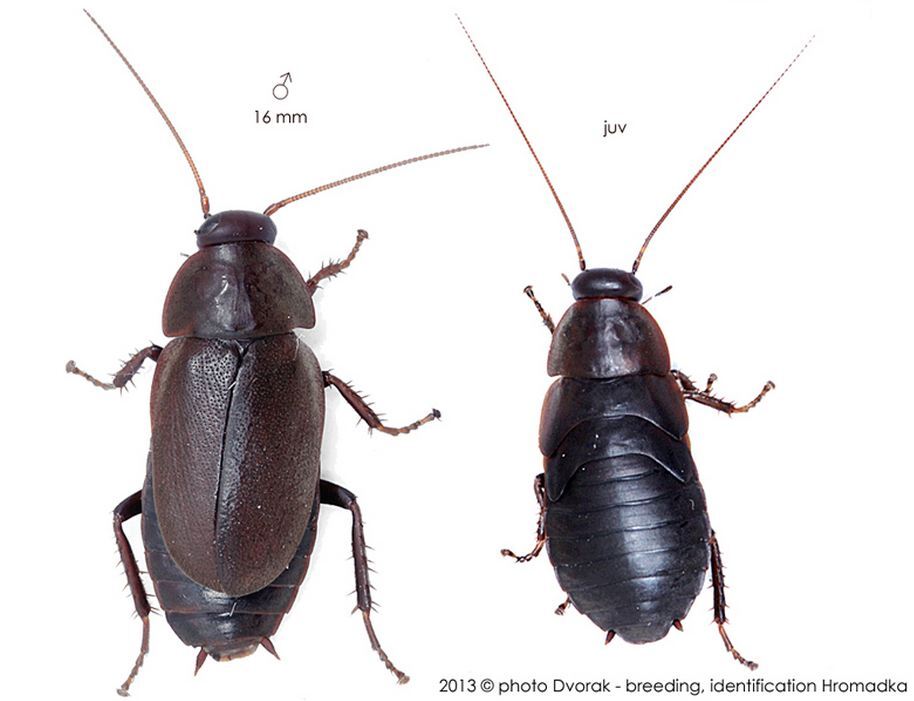
Most cockroaches lay eggs and walk away. Diploptera punctata, commonly called the Pacific beetle cockroach, does something almost mammalian instead. It is the only cockroach species known to be truly viviparous — it carries its embryos inside a brood sac (essentially an insect uterus) and gives birth to live young.
While the embryos develop, the brood sac lining secretes a nutrient-rich fluid that the embryos drink. That fluid supports a roughly 60-fold increase in the embryos' total protein content over the course of their development — an enormous nutritional investment for such a small animal. Because of that maternal-nourishment role, scientists nicknamed the secretion "cockroach milk," even though it has nothing to do with mammary glands.
From liquid to crystal
Here's the part that makes this story unusual even among "insects do weird things" stories: once the embryo swallows the liquid milk, it doesn't stay liquid. Inside the embryo's midgut, the proteins concentrate and self-assemble into solid, brick-like crystals — a storage strategy that lets the embryo carry a dense, stable nutrient reserve and draw on it steadily as it digests, rather than needing a constant fresh supply.
Researchers first noticed these glittering crystals decades ago, but it took modern structural biology to figure out exactly what they were made of and why they behaved that way.
The 2016 breakthrough: solving the structure atom by atom
The pivotal study came from an international team — including scientists in India, the United States, Japan, and France — led by Ramaswamy Subramanian, with Sanchari Banerjee and Nathan Coussens as key contributors, published in 2016 in the journal IUCrJ (International Union of Crystallography Journal). Using X-ray crystallography on crystals extracted directly from cockroach embryo guts, the team solved the structure at atomic resolution — about 1.2 Ångströms, an extremely fine level of detail rarely achieved for a crystal grown naturally inside a living organism rather than in a lab dish.
What they found reshaped how "protein crystal" is usually defined. Textbook crystals are made of identical, repeating units. These weren't. The cockroach milk crystals turned out to be a patchwork of related but distinct proteins — dubbed Lili-Mip (short for lipocalin-like milk protein) — each carrying different sugar chains (glycosylation) and different bound fat molecules. The proteins fold into a barrel-shaped structure typical of the lipocalin family, a group of proteins built to cradle and transport lipids. Despite that heterogeneity, the molecules still pack together into an orderly, stable lattice.
The nutritional headline from that structure: a single Lili-Mip crystal was estimated to hold more than three times the energy, gram for gram, of dairy milk — even surpassing the calorie density of buffalo milk, which had previously held the "most caloric milk" title. Because the crystal contains protein, complex sugars, and lipids together, the researchers described it as functioning like a complete, slow-release meal — dissolving and releasing nutrients gradually as the embryo digests it, rather than delivering everything at once.
Digging deeper: what newer studies have added
The 2016 paper wasn't the end of the story — it kicked off a line of follow-up research probing exactly how these crystals work at the molecular level.
Recombinant protein studies (2022). Researchers produced Lili-Mip in the lab (rather than extracting it from cockroaches) and compared glycosylated and non-glycosylated versions, confirming the recombinant protein folds the same way as the naturally occurring crystal — an important step toward producing the protein at scale without needing actual cockroaches.
Fatty-acid binding and stability (2023). A study published in PLOS ONE by Santhakumari, Dhanabalan, and colleagues (including Subramanian) dug into how three specific Lili-Mip variants — Lili-Mip1, 2, and 3 — bind fatty acids. They found all three isoforms can grab a range of different fatty acids with similar affinity, a flexibility traced to a shape-shifting phenylalanine side chain in the protein's binding pocket that lets it accommodate different-sized lipid molecules. The team also measured the protein's thermal stability across a range of pH levels and found it's most stable in acidic conditions, mirroring the naturally acidic environment of the embryo's gut (measured at a pH of roughly 3.4) where the crystals actually form and are stored. That pH sensitivity may help explain why the crystals form and hold together specifically inside the gut rather than dissolving prematurely.
A 2024 review weighing the "superfood" case. In the Journal of Asia-Pacific Entomology, researchers reviewed the accumulated molecular and biochemical evidence on cockroach milk and evaluated its case as a future food source, weighing its dense nutrition and comparatively lower environmental footprint against the practical and regulatory hurdles standing between a lab curiosity and a grocery-shelf product.
Evolutionary origins. Separately, ongoing work tracing the Milk gene family back to a 2004 discovery (which first identified roughly 25 related cDNA sequences encoding the milk proteins) continues to be refined, including recent preprint research examining how this nutrient-provisioning system evolved alongside live birth in this cockroach lineage.
2026: the discovery wins an Ig Nobel Prize
On September 3, 2026, nearly a decade after the original structural paper was published, the discovery received a fittingly quirky honor: the Ig Nobel Prize in Chemistry, awarded at a ceremony in Zurich, Switzerland — notably the first time the ceremony was held outside the United States since the awards began in 1991. Ramaswamy Subramanian, Leonard "Leo" Chavas, and Nathan Coussens accepted the prize on behalf of the full international research team, reportedly performing a song about their decade-long research journey while wearing cockroach-themed hats.
The Ig Nobel Prizes honor research that "first makes people laugh, and then makes them think" — and reviewers covering the award noted that beneath the giggle-inducing premise sits genuine, rigorous structural biology: solving an atomic-resolution structure of a naturally heterogeneous, in vivo-grown crystal is a technically difficult feat regardless of which organism it comes from. The renewed attention has also reintroduced the research to a much wider audience nearly ten years after its original publication.
Could humans actually eat this?
Despite the recurring "superfood of the future" headlines that have followed this research since 2016, cockroach milk crystals are nowhere near your grocery store. A few real obstacles stand in the way:
- Scale. Extracting crystals directly from cockroach guts is wildly impractical — reports have noted it could take roughly 1,000 cockroaches to yield around 100 grams of milk. That's why researchers have focused on producing the protein recombinantly, using yeast or other lab systems, rather than "milking" roaches.
- Safety. As of the most recent reporting, researchers have not yet established whether the crystals or the recombinant protein are safe for human consumption — a basic prerequisite before anything resembling a supplement could reach consumers.
- Public perception. Even with a compelling nutritional case, the "it comes from a cockroach" factor remains a significant marketing and acceptance hurdle, however scientifically irrelevant that reaction might be.
For now, the more realistic short-term application isn't a beverage — it's what the protein's structure can teach engineers and biochemists about designing stable, slow-release, nutrient-dense materials, whether for food science, supplements, or other biotechnology applications.
Why it matters beyond the "ick factor"
Strip away the novelty, and this research offers a genuinely rare window into structural biology: very few protein crystals that form naturally inside a living animal — as opposed to being grown artificially in a lab — have ever been solved at atomic resolution. The fact that this particular crystal is also heterogeneous (built from multiple different protein variants rather than one uniform molecule) makes it an unusual case study in how biological systems can achieve crystalline order without molecular uniformity — a question relevant well beyond cockroach biology, touching on how organisms concentrate and store nutrients in solid form more broadly.
So the next time cockroach milk resurfaces as a "future superfood" headline, the more interesting story isn't really whether you'll ever drink it — it's what a much-maligned insect has already taught structural biologists about packing enormous nutritional density into an impossibly small, stable package.
Sources and further reading
- Banerjee, S., Coussens, N.P., et al. (2016). Structure of a heterogeneous, glycosylated, lipid-bound, in vivo-grown protein crystal at atomic resolution from the viviparous cockroach Diploptera punctata. IUCrJ, 3(4), 282–293.
- Santhakumari, P.R., Dhanabalan, K., et al. (2023). Variability in phenylalanine side chain conformations facilitates broad substrate tolerance of fatty acid binding in cockroach milk proteins. PLOS ONE.
- Karthika, P., Chitra, P., Manikantan, P., & Balamuralikrishnan, B. (2024). Potential of insect-based milk moiety from Pacific beetle cockroach, Diploptera punctata (Blattodea): Insights as superfood. Journal of Asia-Pacific Entomology, 27(4).
- Williford, A., Stay, B., & Bhattacharya, D. (2004). Evolution of a novel function: nutritive milk in the viviparous cockroach, Diploptera punctata. Evolution & Development, 6, 67–77.
- Purdue University Department of Biological Sciences (2026). Cockroach milk research earns 2026 Ig Nobel Prize in Chemistry.
- Chemistry World (2026). Ig Nobel prize 2026: cockroach milk wins chemistry award at first ceremony outside the US.
- The Scientist (2026). Cockroach Milk Proteins Churn Out an Ig Nobel Win.
- French national synchrotron facility (SOLEIL). The structure and the nutritive power of cockroach milk crystals.